Bremen, GA/Serving West Georgia & metro Atlanta
CDM Systems.Free assessment
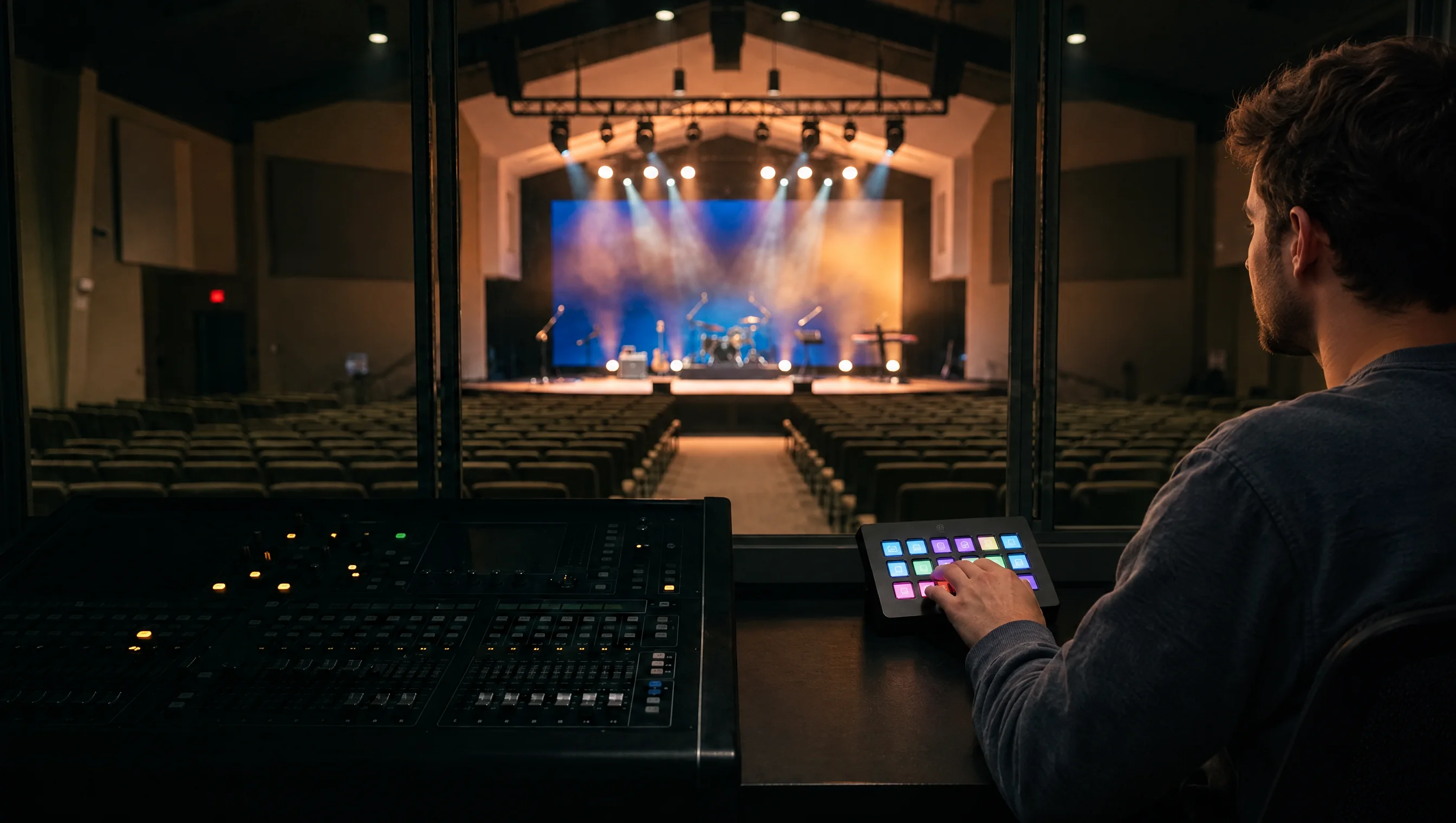
A tech in the booth pressing a button on a control pad beside the mixing console, looking out at a lit stage

Up in order.Never a pop.

Power sequencing brings an AV rack up in the right order and takes it down in reverse — so the speakers never thump, the breaker never trips, and the person in the booth only has to press one button.

Ordered startupAmplifiers on last
/
Ordered shutdownAmplifiers off first
/
One buttonBooth or browser
/
Same every timeWhoever is in the booth

Why it matters

The order matters.Every single Sunday.

A rack that is switched on all at once works — until the day it does not. Three things go wrong, and all three are fixed by the same small box.

01 / The pop

A thump throughevery speaker.

When the amplifiers wake up before the console and processors have settled, whatever noise those make on the way up goes straight to the speakers. Every Sunday, at full volume.

  • Amplifiers come on last
  • Amplifiers go off first
  • No thump on startup or shutdown
02 / The breaker

Everything onat once.

A rack full of gear switched on in the same instant pulls its startup current all together. Staggering it is the difference between a quiet morning and a dark booth.

  • Startup spread out in steps
  • Each step given time to settle
  • The same order every time
03 / The volunteer

Nobody remembersthe order.

The right sequence lives in one person’s head, and they are not here this week. One button in the booth, or one in a browser, does it the same way no matter who is there.

  • One button in the booth
  • Or a button in a browser
  • Nobody has to remember the order

How a sequence runs

Upstream first.Amplifiers last.

Every rack is different, so the steps and the timing between them are set for the gear that is actually in it. The rule underneath never changes.

Plan my rack

Network and control first

The switch, the gateway and anything the rest of the system talks to, so it is ready before anything asks for it.

01

Sources and the console

Mixers, playback and wireless receivers — everything that makes signal, given time to boot and settle.

02

Processing

Speaker processing and anything between the console and the amplifiers, before the amplifiers are allowed on.

03

Amplifiers, last

Only once everything upstream is quiet. At shutdown the whole order runs backwards, amplifiers off first.

04

What goes in the rack

A web-basedPower controller.

Mounted with the equipment it powers, wired to the network, and set up so it runs the same way every time, whoever presses the button.

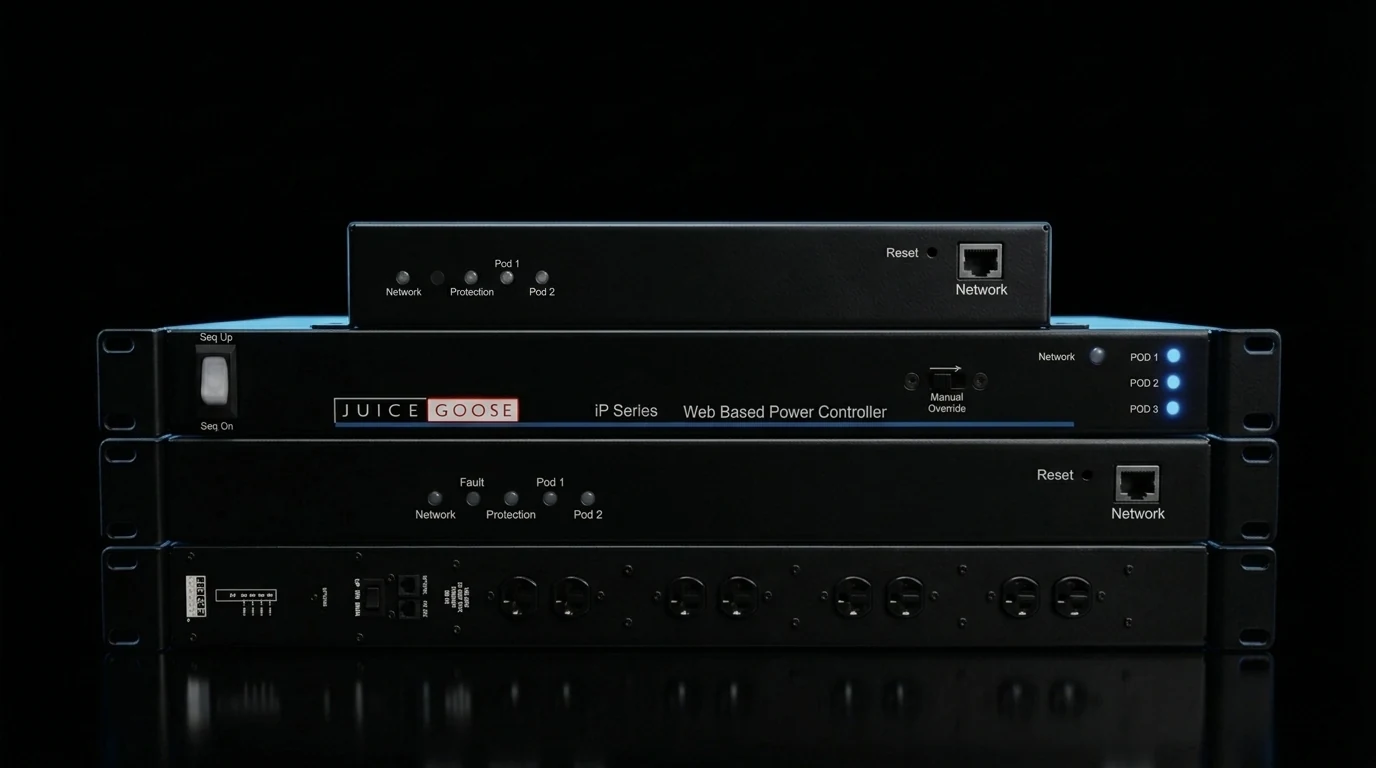
Rack-mounted web-based power controllers stacked on top of each other, with network ports and status lights
01

Rack-mounted controllers

The sequencing lives in the rack with the gear it powers, not in a power strip behind a desk.

02

Control from a browser

Power the system up or down from the booth, the office or a phone on the network — and see what is on.

03

Set for the gear in the rack

The steps, and the pause between each one, are set for what is actually plugged in, not copied from another job.

04

Controls on the unit itself

If the network is down, the switches on the front of the controller in the rack still work, right there at the rack.

Common questions

Asked by whoeverFlips the switches.

Usually the person who has learned to turn the amplifiers on last by hand, and would like the rack to remember it for them.

What is a power sequencer?

A power sequencer switches the outlets in an AV rack on one at a time, in a set order with a pause between each step, and switches them off in the reverse order. The point is that the amplifiers are always the last thing to come on and the first thing to go off, so nothing upstream of them can send a thump through the speakers while it boots or shuts down.

01

Why do our speakers pop when we turn the system on?

Usually because the amplifiers are already on while the console, the processors or the wireless receivers are still powering up. Whatever noise those make on the way up goes straight to the amplifiers, and the amplifiers send it to the speakers at full volume. Bringing the amplifiers up last, after everything upstream has settled, is what stops it.

02

Can sequencing be added to the rack we already have?

In most cases, yes. It does not mean replacing the equipment, only changing what the equipment is plugged into. We look at what is in the rack, which circuits feed it and how much each step needs to draw, then set the order and the timing for the gear that is actually there.

03

Does a computer have to be running for it to work?

No. The order lives in the power controller in the rack. A button in the booth or a page in a browser only tells it to start. If the network is down, the switches on the front of the controller still work, right there at the rack.

04

How much does power sequencing cost?

It depends on how many racks there are, how many steps each one needs and which circuits feed them, so we do not put a number on it before seeing the room. The free assessment comes first, and a written quote follows it.

05

Part of a bigger system

Sequencing is one piece.Here is the rest.

Production AV Church networks Racks & storage

No cost, no obligation

Start with aFree network assessment.

We open the rack, trace what powers what, and tell you plainly what order it should come up in and what it would take to make that one button.

Typical response — same business day